
Hair transplantation has advanced significantly in recent years, offering options that address not only hair restoration but also the growing demand for greater discretion. One of the most common concerns among people considering the procedure is whether shaving or cutting the hair is necessary.
Non-Shaven FUE has introduced a different approach, allowing selected patients to undergo hair transplantation without complete shaving of the donor area and, in many cases, without shaving the recipient area either.
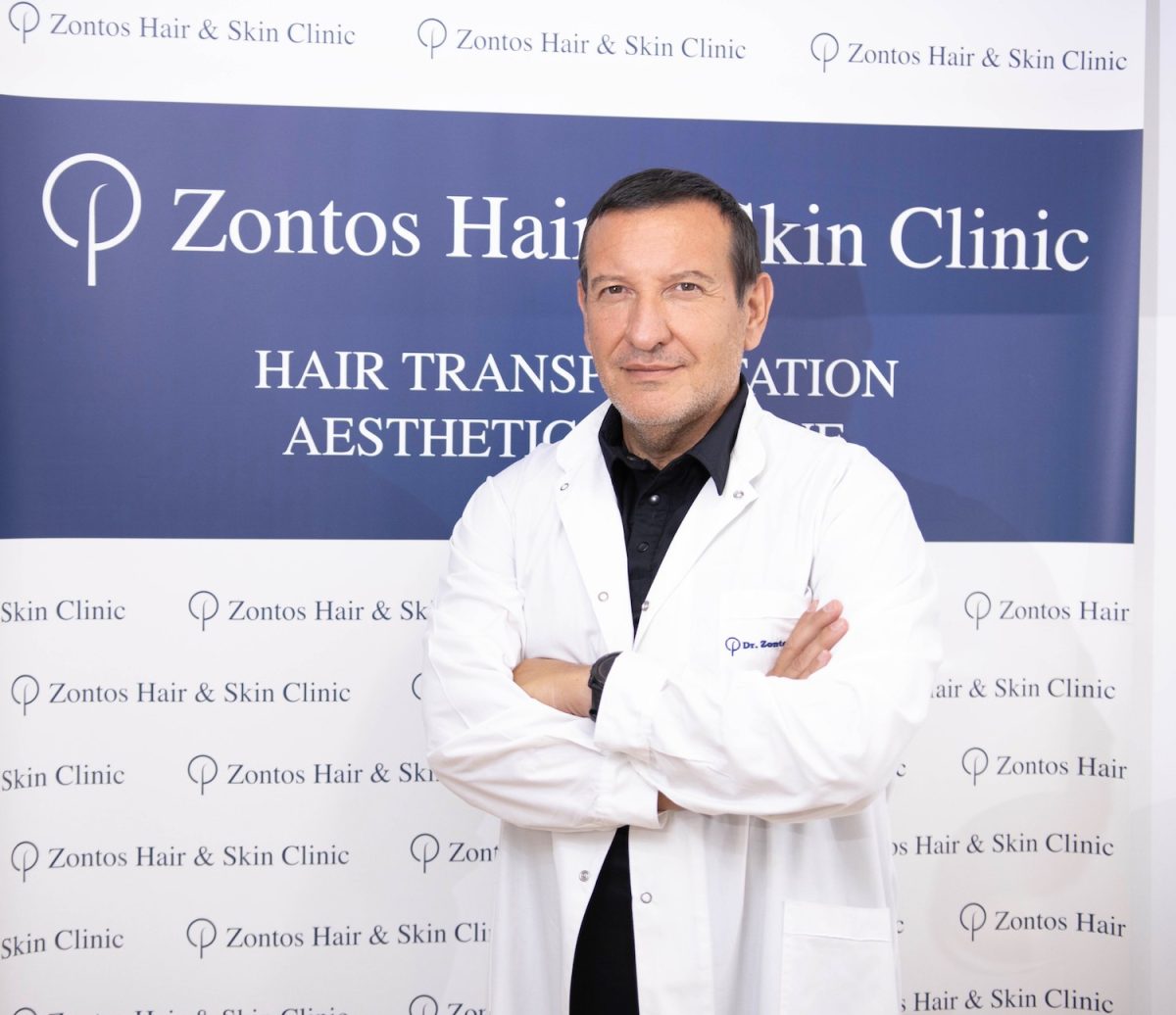
This is a specialised and technically demanding technique that Dr. Georgios Zontos has been developing and applying for more than fifteen years. His clinical and scientific work has focused on refining Non-Shaven FUE, improving its individual surgical stages and presenting the results to the international hair restoration community.
His long-standing experience with the technique, together with his participation in international scientific organisations, publications and educational activities, has contributed to an approach that combines surgical precision, scientific evidence and care tailored to the individual patient.
Following his recent scientific publication in Hair Transplant Forum International, the internationally recognised hair restoration surgeon explains how Non-Shaven FUE works, why it requires advanced expertise and how it can offer patients a more discreet treatment experience.
A technique designed to preserve the patient’s existing hairstyle
In conventional FUE, shaving provides the surgeon with easier access and visibility during graft extraction. With Non-Shaven FUE, the procedure is carried out between the existing hairs, which remain in place.
As a result, the surrounding hair can help conceal the extraction points in the donor area. In selected cases, the recipient area may also be treated without complete shaving, making the initial postoperative appearance more discreet.
Preserving the existing hair length, however, increases the technical demands of the procedure. Grafts must be extracted within a restricted visual field while protecting both the selected follicular units and the surrounding hair.
A related specialised approach is Long Hair FUE, which also avoids conventional shaving and requires careful surgical planning and precise graft handling.
Read in Healthylab about the modern advances in hair restoration surgery: Modern Advances in Hair Restoration Surgery Through the International Scientific Community
Dr. Georgios Zontos answers questions about Non-Shaven FUE
Do patients still need to shave their heads before surgery?
In many cases, no. Hair transplantation can be performed without shaving the donor area and often without shaving the recipient area, allowing patients to return quickly to normal life.
What is Non-Shaven FUE?
It is a specialised FUE technique performed through existing hair, preserving the patient’s hairstyle and providing maximum discretion.
Is it technically more demanding?
Absolutely. It requires advanced surgical skills, extensive experience and specialised instrumentation.
How have you contributed to the development of the technique?
For more than fifteen years I have dedicated a significant part of my clinical and scientific work to refining Non-Shaven FUE. Through thousands of procedures, scientific publications and international presentations, I have contributed to its continued development.
What are your international scientific activities?
I currently serve as Secretary of the American Board of Hair Restoration Surgery and actively participate in the International Society of Hair Restoration Surgery as Chair, Co-Chair and international faculty member.
What is the future of hair transplantation?
The future belongs to minimally invasive procedures that combine natural results, discretion and rapid recovery. Non-Shaven FUE represents that direction.
International scientific activity and continuous development
Dr. Zontos’ contribution to Non-Shaven FUE extends beyond the clinical application of the technique. It is supported by long-term surgical experience, systematic evaluation of results and active participation in international scientific education.
His participation in the 48th International S.I.TRI. Congress in Rome reflects this broader scientific activity and his involvement in discussions concerning the latest developments in hair restoration surgery.
Presenting techniques and clinical findings to an international audience allows surgical approaches to be discussed, compared and assessed by specialists from different countries. This exchange of knowledge supports the continued refinement of Non-Shaven FUE and other modern hair restoration techniques.
Hair transplant without shaving and personalised planning
An unshaven hair transplant is a modern option for patients who wish to address hair loss without a sudden and immediately visible change in their appearance. With Non-Shaven FUE, the procedure can be performed more discreetly, as the existing hair helps conceal both the donor and recipient areas.
However, a hair transplant without shaving is not carried out in the same way for every patient. The condition of the donor area, the extent of thinning, hair length and the number of grafts required all need to be carefully assessed before selecting the technique.
The surgeon’s experience and a personalised treatment plan are essential, as Non-Shaven FUE requires a high degree of precision during both extraction and implantation of the follicular units. When performed in appropriately selected cases, it can combine natural-looking results, limited recovery time and greater discretion in the patient’s daily life.

Επιμέλεια: Συντακτική ομάδα